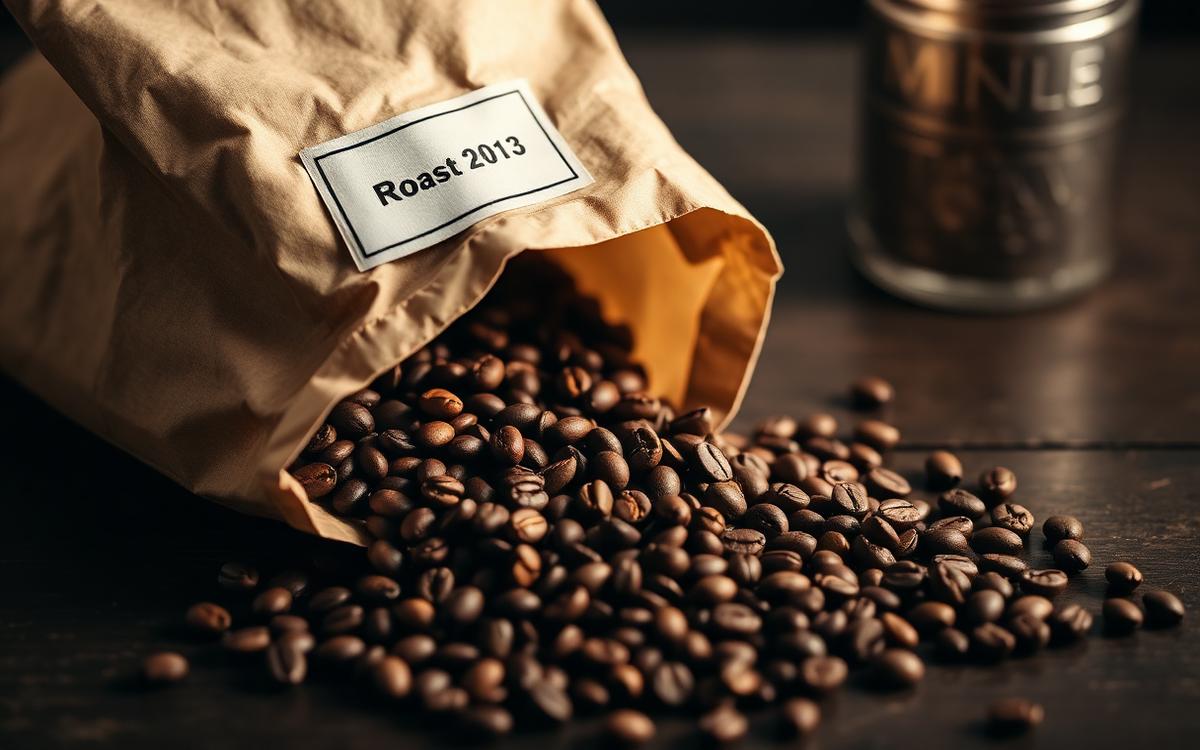
Roasting traps carbon dioxide inside the bean. Over the following weeks that CO₂ escapes, taking volatile aromatics with it. Freshness is really a curve: too early and the gas disrupts extraction, too late and the aroma is simply gone.
The curve, week by week
- Days 0–3: heavy degassing. Pour-over blooms violently and espresso gushes. Usable, rarely optimal.
- Days 4–14: the filter sweet spot. Aromatics are intact and the gas has settled.
- Days 10–21: the espresso sweet spot. Slightly longer rest gives steadier flow and more sweetness.
- Weeks 4–6: still perfectly pleasant, gradually flatter and more one-dimensional.
- Beyond 8 weeks: stale — papery, cardboard notes, no top-end aroma.
Darker roasts are more porous, degas faster and go stale sooner than light roasts.
What actually kills coffee
Oxygen first, then heat, moisture and light. Grinding accelerates everything: ground coffee loses most of its aromatic character within 15–30 minutes of exposure to air. That single fact is why a grinder outranks almost every other purchase.
Storage that works
- Keep beans whole until the moment you brew.
- Use an opaque, airtight container — a one-way valve bag is fine if you press the air out.
- Store in a cool, dark cupboard, never on top of the machine or next to the hob.
- Buy in quantities you will finish in three to four weeks.
The freezer question
Freezing works, with rules. Portion beans into small airtight bags, freeze once, and never refreeze. Brew straight from frozen or let the sealed bag reach room temperature before opening — otherwise condensation forms on the beans and ruins them. For a bag you cannot finish in a month, the freezer beats the cupboard by a wide margin.