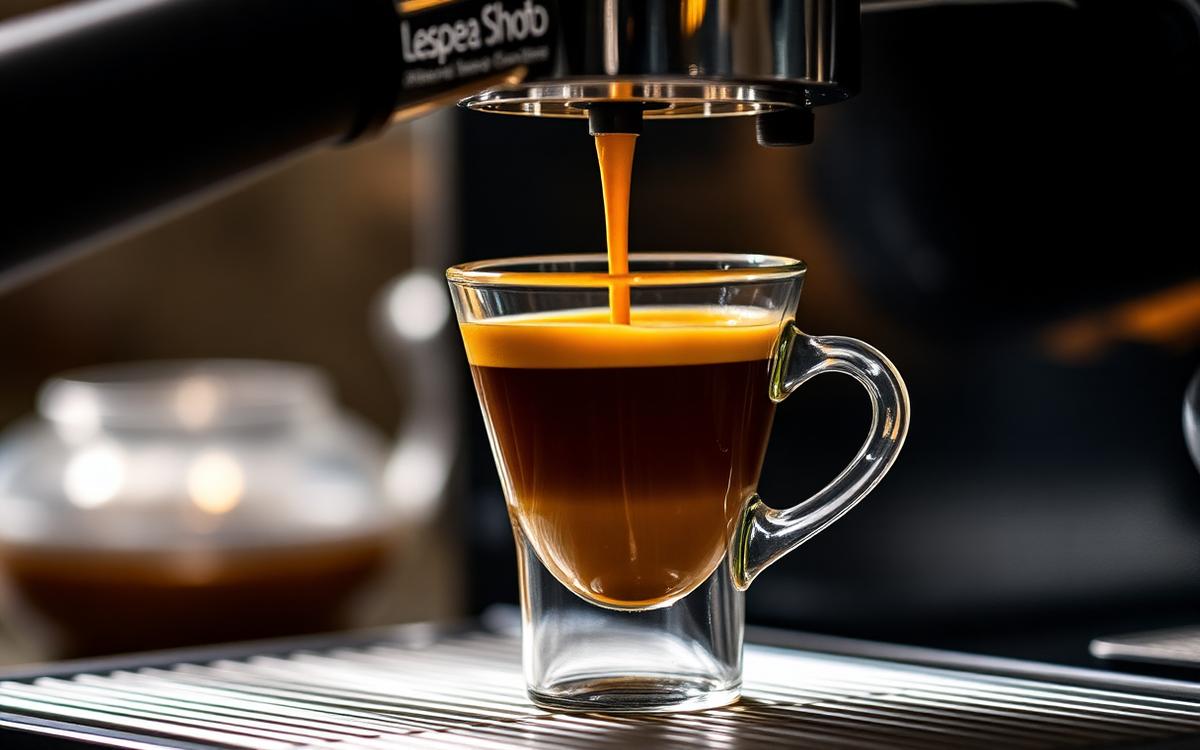
Espresso has three numbers that matter: the dose going in, the liquid espresso coming out, and the time it takes. Fix two, adjust the third, and taste. That is the whole method.
Step 1 — Lock the brew ratio
Start at 1:2. An 18 g dose yields 36 g of espresso in the cup. Weigh the output, not the volume — crema lies about volume. Ristretto (1:1.5) concentrates body and sweetness; lungo (1:3) lightens the cup and raises acidity. Pick 1:2 first and only move once the shot tastes clean.
Step 2 — Aim for a time window
From the moment the pump starts, a 1:2 shot should finish in roughly 25–32 seconds. Faster means the grind is too coarse; slower means it is too fine. Time is a diagnostic, not a goal in itself — a 40-second shot that tastes sweet is not a failure, it is information.
Only the grinder moves. Keep dose, ratio and temperature fixed until the timing is inside the window.
Step 3 — Taste and correct
- Fast, sour, thin: grind finer.
- Slow, bitter, drying: grind coarser.
- Right time but flat: raise the dose by 0.5 g or the temperature by 1 °C.
- Uneven flow or spurting: distribution and tamp problem, not a grind problem.
Puck prep does half the work
Channelling makes every other adjustment meaningless because water finds a shortcut through the puck. Break clumps up with a needle distributor or a gentle stir, level the bed, then tamp straight down with consistent pressure. Level and consistent beats hard.
Let fresh beans rest
Espresso needs more degassing time than filter. Beans 3–5 days off roast gush CO₂ and pull erratically; 10–21 days is usually the sweet spot for espresso. If a bag suddenly runs fast after a week, that is normal ageing — grind finer and carry on.