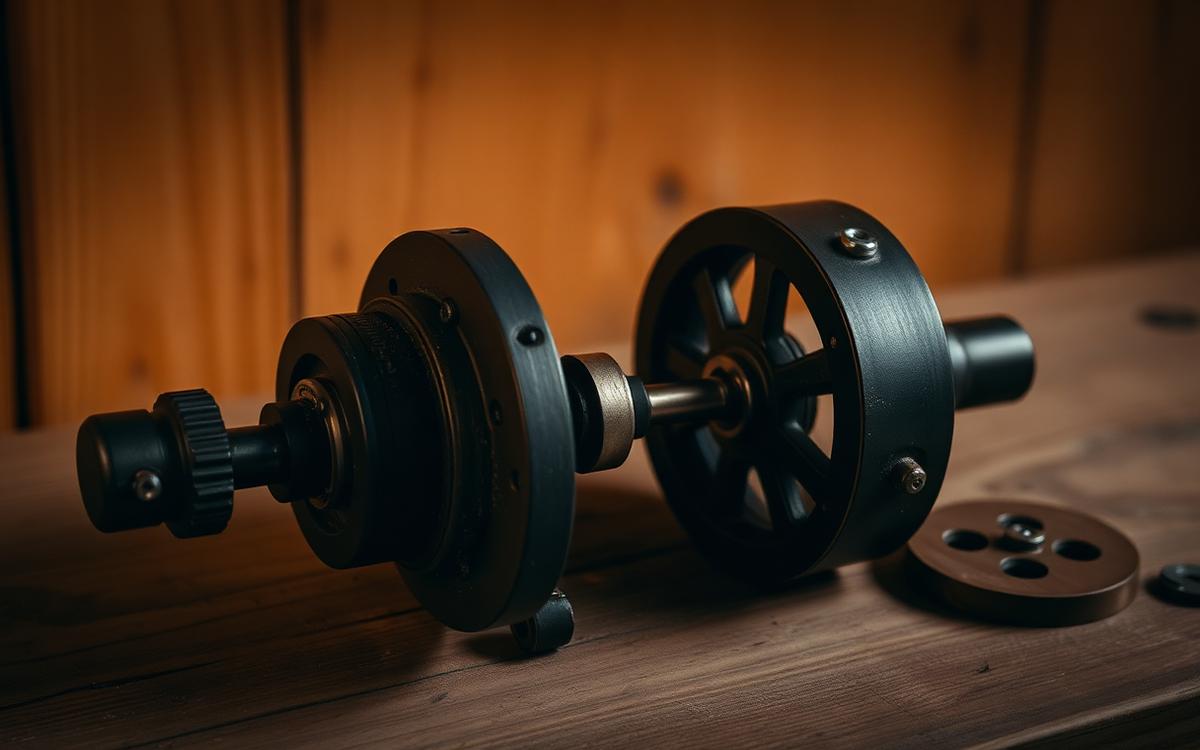
A five hundred pound espresso machine paired with a fifteen pound blade grinder makes worse coffee than a modest machine paired with a good burr grinder. This is not equipment snobbery — it follows directly from how extraction works. Water dissolves coffee from the surface of each particle inwards, so the size of those particles determines how fast each one gives up its flavour. If the particles are wildly different sizes, they extract at wildly different rates, and no brewing skill can reconcile them.
Blades versus burrs
A blade grinder is a propeller in a cup. It smashes beans randomly, producing boulders and dust simultaneously, and the only control you have is how long you run it. Running it longer does not make the grind more even; it just creates more dust. The result is a cup that tastes sour and bitter at once — under-extracted boulders and over-extracted fines in the same brew.
Burr grinders crush beans between two rotating abrasive surfaces set a fixed distance apart. Nothing leaves the chamber until it is small enough to pass through that gap, so the output clusters around a target size. That single mechanical difference is worth more than any recipe.
Particle distribution, not particle size
Every grinder produces a distribution rather than one size, usually with a main peak plus a secondary population of fines created by fracture. Quality is measured by how tight that main peak is and how few fines accompany it. Fines punch above their weight because their surface-area-to-mass ratio is enormous: a small percentage by weight contributes a large share of extracted solids, and they are the main source of bitterness and clogged filters.
You cannot judge a grinder by its finest setting. Judge it by how uniform its output is at the setting you actually brew with.
Conical or flat
Conical burrs use a cone spinning inside a ring. They are efficient, run cooler, need less motor torque and are common in hand grinders and mid-range electrics. They tend to produce a bimodal distribution — a main peak plus a distinct fines population — which many people perceive as more body and a rounder, more forgiving cup.
Flat burrs use two parallel rings facing each other. Particles must travel to the outer edge before exiting, so they get worked more consistently, yielding a tighter unimodal distribution. The usual description is more clarity and more distinct acidity. Flat burrs also retain more grounds and generally cost more.
Neither is objectively superior. Burr alignment, sharpness and quality of manufacture matter far more than geometry — a well-aligned conical beats a poorly aligned flat every time.
Hand or electric
A good hand grinder costs a fraction of an equivalent electric one, because you are supplying the motor. For filter brewing at coarse settings, 20 g takes 30-45 seconds of pleasant effort, and hand grinders in the mid price range genuinely rival electrics costing three times as much. For espresso, fine grinding takes longer and requires real force, and if you pull several shots a day the novelty vanishes quickly. Volume is the deciding factor, not quality.
Features worth paying for
- Stepless or fine-stepped adjustment — essential for espresso, where the useful range is tiny. Coarse steps are fine for filter.
- Low retention — grounds stuck inside the chamber turn up in tomorrow's brew, stale.
- Rigid burr mounting — flex under load ruins consistency; this is where cheap grinders fail.
- Single dosing — weighing beans per brew keeps everything fresh and lets you switch coffees freely.
Features that matter less
Built-in timers and dose memory are conveniences, not quality. A hopper full of beans looks impressive and slowly goes stale. Titanium or ceramic coatings extend burr life but change flavour far less than the marketing implies. Very high burr diameters mainly speed throughput, which matters in a café and rarely at home.
Maintenance
Oils accumulate on the burrs and go rancid, and old grounds hide in every crevice. Brush the burrs monthly and do a full strip-down every few months. Grinder cleaning tablets work well and take two minutes. Steel burrs dull after roughly 500-1000 kg of coffee for domestic use — effectively a lifetime for most homes, though grinding oily dark roasts and any accidental stone will shorten it dramatically.
A sensible budget order
Grinder first, then water, then brewer, then everything else. A capable hand grinder, a cheap dripper and filtered water beat an expensive brewer fed with pre-ground supermarket coffee by an embarrassing margin.