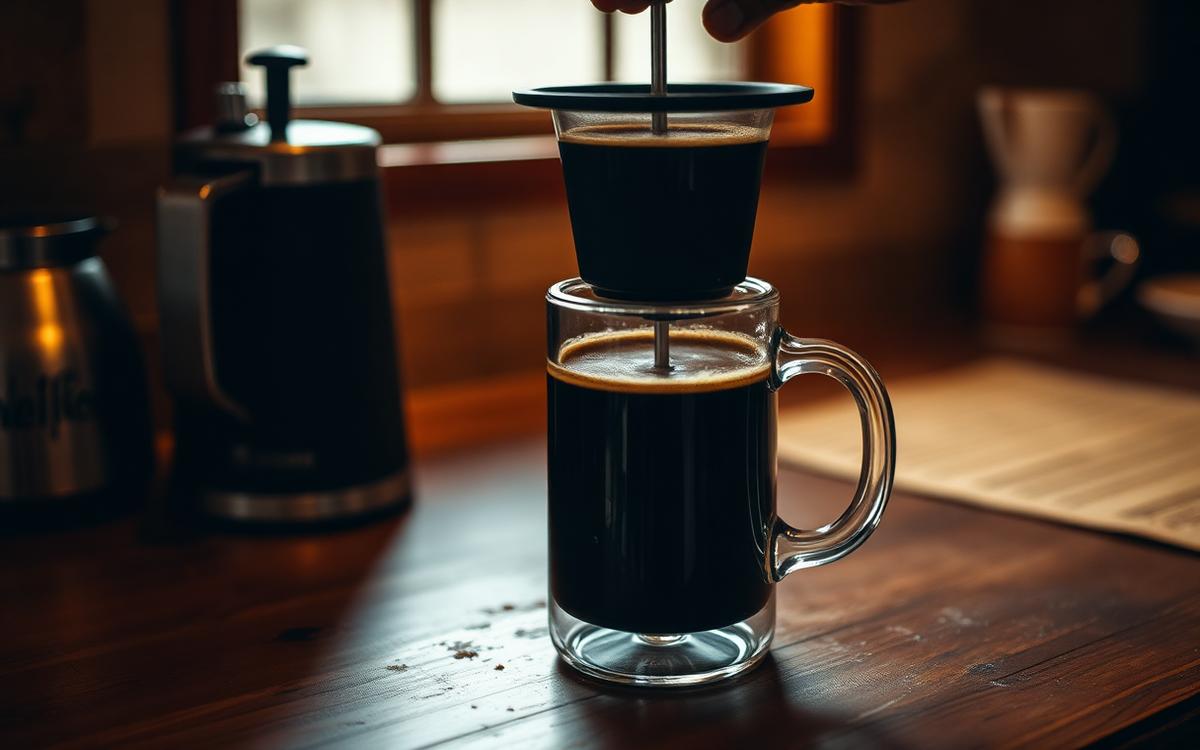
The AeroPress is a hybrid. It steeps like an immersion brewer, then filters under pressure like a very gentle espresso machine. That combination gives it an unusually wide operating range: the same device makes a clean, tea-like filter cup, a thick concentrate for iced drinks, and everything in between. The trade-off is that "AeroPress recipe" means almost nothing on its own — the results depend entirely on which variables you pinned down.
What the pressure actually does
Plunging generates perhaps one bar of pressure, roughly a tenth of an espresso machine. It is not enough to emulsify oils or build crema, but it is enough to push water through a fine bed quickly and to squeeze the last liquid out of the slurry. Practically, that means you can grind much finer than a pour-over would tolerate without waiting five minutes for a drip. Fine grind plus short contact time is the AeroPress's signature trick, and it is why the brewer produces sweet cups from beans that taste flat elsewhere.
Recipe one: the everyday standard
- 15 g coffee, medium-fine grind, rinsed paper filter.
- Chamber upright on the mug, coffee in, 200 g water at 90 °C.
- Stir five times, cap on, steep 90 seconds.
- Press slowly over 30 seconds. Stop at the hiss.
This makes about 190 ml of clean, medium-bodied coffee at roughly a 1:13 ratio — stronger than a pour-over, lighter than concentrate. It suits medium roasts and forgives slightly stale beans.
Recipe two: inverted for control
Flipping the AeroPress upside down and assembling it plunger-first prevents any liquid dripping through during the steep, which gives you exact control over contact time. It matters most with long steeps and coarse grinds where a standing drip would meaningfully change the ratio.
- 18 g coffee, medium grind, inverted chamber.
- 250 g water at 85 °C for light roasts, 92 °C for darker ones.
- Stir, cap with rinsed filter, steep two minutes.
- Swirl, flip onto the mug, press over 30 seconds.
The flip is the only risk: hold the chamber and cap together firmly, and use a mug wide enough that it lands flat. Beyond the drip control, inverted brewing is not inherently better — plenty of world championship recipes are upright.
Lower water temperature is the AeroPress's underrated dial. At 80-85 °C, bitterness drops away and light roasts taste dramatically sweeter.
Recipe three: concentrate for iced and milk drinks
- 25 g coffee, fine grind (just coarser than espresso).
- 90 g water at 92 °C, stir well, steep 60 seconds.
- Press firmly over 40 seconds into a glass with 100 g of ice.
This lands near 1:3.5, thick enough to stand up to milk or to dilute over ice without tasting watery. It is the fastest route to a decent iced latte without an espresso machine, and it is the recipe most worth owning a scale for, because small dose errors move the strength a long way.
Paper, metal or both
The stock paper filter gives clarity and removes almost all oils and fines. A metal filter passes oils and gives a heavier, slightly hazier cup closer to a French press. Some people stack both: a metal disc under a paper circle, which barely changes flavour but stops the paper sticking to the cap. Paper filters can be rinsed and reused several times; the flavour penalty is negligible until the paper starts to tear.
Variables in order of impact
- Grind size — the coarse-to-fine range here is enormous, and it changes everything.
- Ratio — anywhere from 1:3 to 1:16 is legitimate; decide what drink you want first.
- Temperature — the cheapest way to tame bitterness without weakening the cup.
- Steep time — real but smaller than people assume, especially past 90 seconds.
- Plunge speed — slow and steady; fast pressing forces fines through the paper.
Bypass brewing
A useful habit borrowed from competition: brew a strong, short concentrate and then dilute it in the cup with hot water. Because the brew itself never runs long, you avoid the bitter compounds that come out late in extraction, and you control final strength independently by how much water you add. Try 20 g coffee with 120 g water, pressed at 1:30, then topped up to 240 g. It tastes cleaner than a straight 1:12 brew almost every time.
Care and travel
Eject the puck immediately — it pops out as a dry disc and the chamber wipes clean with a rinse. Store the plunger separated from the chamber so the rubber seal does not stay compressed; a flattened seal is the usual cause of a leaky AeroPress after a year. Replacement seals cost very little and restore the brewer completely.