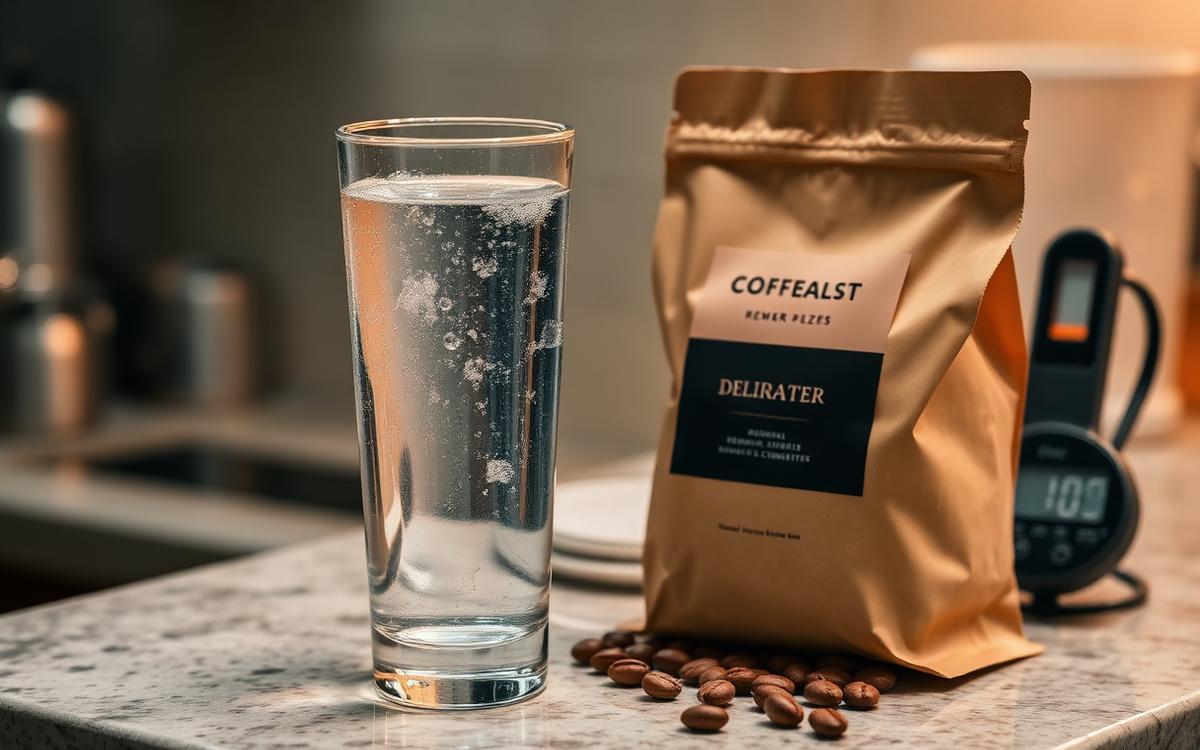
A brewed cup is roughly 98.5% water and 1.5% dissolved coffee. The minerals already present in that water decide how much flavour gets extracted and how it is perceived on the palate.
Two numbers matter
- General hardness (GH): mostly magnesium and calcium. These bind to flavour compounds and pull them out of the grounds. Target roughly 50–150 ppm as CaCO₃.
- Alkalinity (KH): mostly bicarbonate. It buffers acidity — too much and the cup tastes flat and chalky; too little and bright coffees taste sharp. Target roughly 40–70 ppm.
Magnesium favours fruit and sweetness. Calcium favours body and a heavier, creamier mouthfeel.
Why distilled water fails
Zero-mineral water has nothing to bind extracted compounds, so the cup comes out thin, sour and hollow no matter how well you brew. Distilled and reverse-osmosis water are excellent starting points — but only once you add minerals back.
Practical options, cheapest first
- Filter jug: removes chlorine and some hardness. A real improvement over hard tap water and enough for most people.
- Bottled low-mineral water: look for a bottle listing 50–150 mg/L dry residue. Consistent and requires no effort.
- Mineral concentrates: add a measured dose of magnesium and bicarbonate to distilled water. Total control, very repeatable.
- DIY recipe: Epsom salt plus baking soda in distilled water, mixed as a concentrate and dosed per litre.
Protect your machine too
Hard water scales boilers and group heads. If you own an espresso machine, low-to-moderate hardness is not just a flavour choice — it is the difference between descaling twice a year and replacing a boiler.
One thing to try tonight
Brew the same coffee twice, once with tap water and once with low-mineral bottled water, keeping grind, ratio and time identical. The gap between the two cups is usually larger than people expect, and it costs nothing to find out.