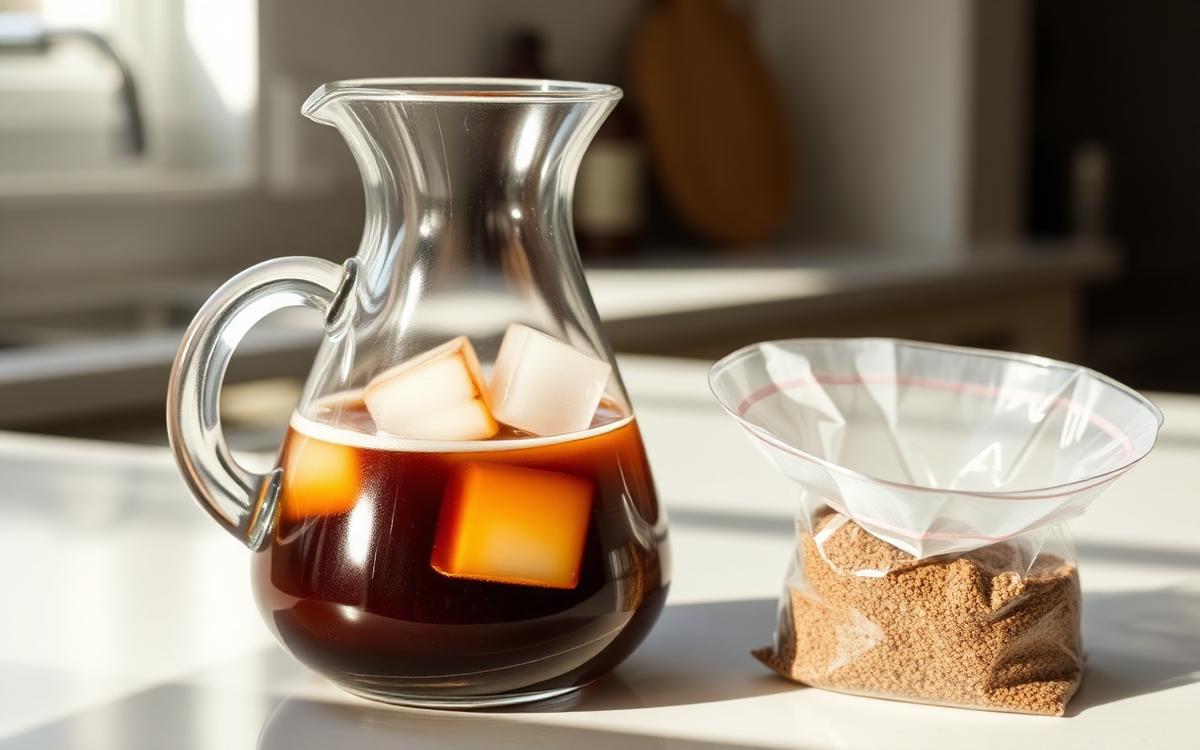
Cold water extracts slowly and selectively. It leaves behind many of the acids and bitter compounds that hot water pulls out, which is why cold brew tastes round, chocolatey and low in acidity. The trade-off is time: what a V60 does in three minutes, cold water needs twelve to eighteen hours to do.
Concentrate or ready-to-drink?
- Concentrate: 1:4 to 1:5 coffee to water by weight. Dilute 1:1 or 1:2 when serving.
- Ready-to-drink: 1:12 to 1:15. Pour straight over ice, no dilution.
Concentrate is the better default for home. It occupies less fridge space, keeps longer, and lets you make black cold brew, an iced latte or a coffee tonic from one batch.
Steeping time
Twelve hours at room temperature or sixteen to eighteen hours in the fridge is a solid window. Room temperature extracts faster and tastes slightly heavier; fridge steeping is cleaner and safer over long batches. Beyond about 24 hours you gain woody, papery flavours rather than sweetness.
Grind very coarse. Fines suspended for 16 hours are the main cause of muddy, silty cold brew.
Filtering properly
Strain first through a mesh basket or French press screen to remove the bulk of the grounds, then a second pass through a paper filter for clarity. Skip the second pass if you like a heavier body — just expect sediment at the bottom of the bottle.
Dilution maths when serving
If you brewed at 1:4 and want a drink around 1:12, add two parts water to one part concentrate. For an iced latte, treat melting ice as part of the water: 60 g concentrate, 120 g milk and a full glass of ice lands close to a café-strength drink.
Storage
Sealed concentrate keeps well for 7–10 days in the fridge; diluted cold brew is best inside 3 days. Store it in glass, not plastic, and keep it away from anything aromatic — coffee absorbs fridge smells enthusiastically.