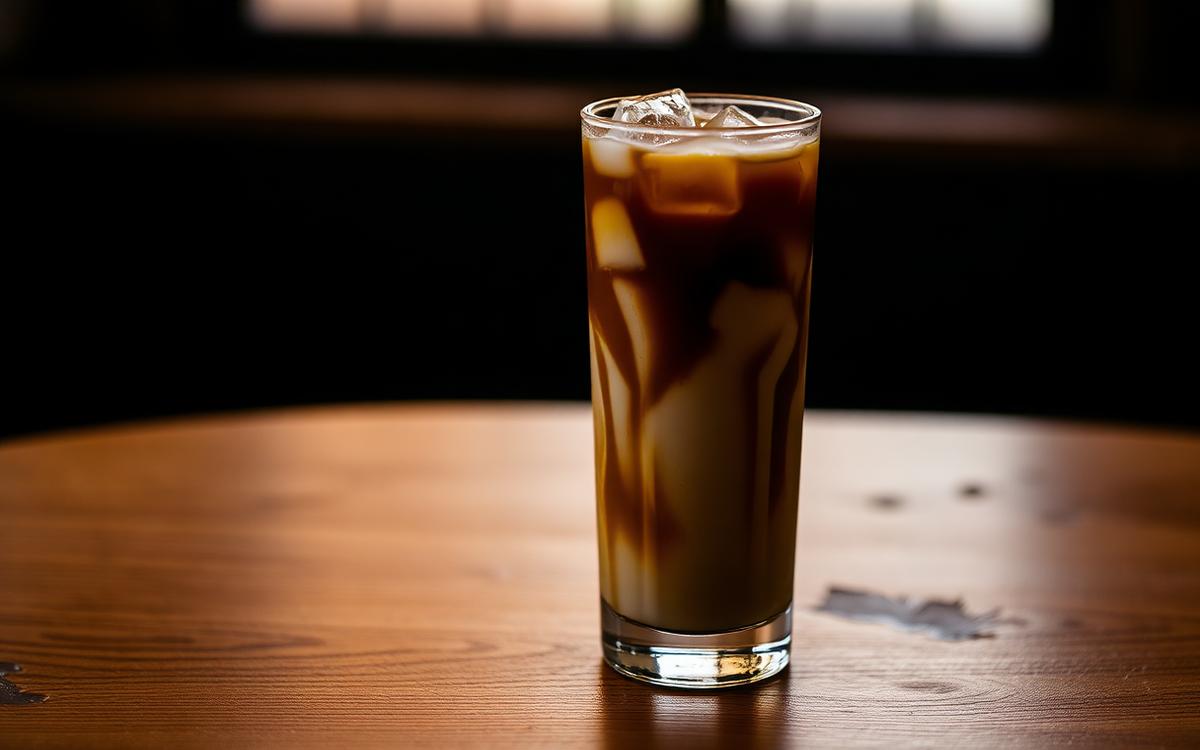
There are three ways to end up with cold coffee: brew it cold, brew it hot and refrigerate it, or brew it hot straight onto ice. The third — commonly called Japanese iced coffee or flash brew — is the one most specialty cafés use for their iced filter, and it is the least understood at home.
Why hot extraction matters
Hot water dissolves a broader range of compounds than cold water, including the delicate volatile aromatics responsible for floral and fruity high notes and the acids that give a coffee its sparkle. Cold brew never extracts many of them, which is exactly why it tastes smooth, chocolatey and low in acidity — it is missing a whole category of flavour by design.
Flash brewing extracts hot, capturing everything, then locks it in by dropping the temperature within seconds. Aromatics that would evaporate from a hot cup over ten minutes stay trapped in the cold liquid instead.
Why not just refrigerate hot coffee?
Because the slow cool-down is the problem. Coffee left to cool on the counter loses volatiles the whole time, and oxidation continues at every temperature above freezing. Coffee chilled slowly in the fridge tastes dull and slightly stale compared with the same brew flash-chilled — a difference that is obvious when tasted side by side.
The ice is not a garnish. It is part of the recipe, and its weight replaces part of the brew water.
The core maths
Decide your total water first, then split it between hot brew water and ice. A useful default is 60% hot water and 40% ice by weight. The ice melts entirely into the brew, so the final strength lands exactly where a hot brew at the same total ratio would.
- Dose: 22 g coffee, medium grind.
- Total water: 350 g at a 1:16 ratio.
- Ice in the carafe: 140 g.
- Hot brew water: 210 g at 94 °C.
Because the brew water is reduced, the contact time shortens. Grind one or two steps finer than your usual hot recipe to compensate, otherwise the result tastes sour and thin.
Method
- Weigh the ice into the carafe or server first. Use good, solid ice, not the crushed cloudy kind that melts before you finish.
- Set the dripper on top, rinse the filter with hot water and discard the rinse water before adding the ice, not after.
- Bloom with 50 g of water for 35 seconds.
- Pour the remaining hot water in two additions, finishing around 2:00-2:30 total.
- Swirl the carafe once drawdown finishes so the last of the ice melts evenly.
- Pour over fresh ice in a glass and drink immediately.
Which coffees shine
This is the method for expressive, high-acid coffees — washed Ethiopians, Kenyans, bright Colombians. Cold amplifies acidity and suppresses sweetness perception, so a coffee that tastes merely pleasant hot can taste electric flash-chilled. Conversely, dark roasts often turn harsh and ashy this way; they belong in cold brew, where slow cold extraction rounds them off.
Iced lattes and milk
Milk mutes acidity and adds sweetness, so a flash-brewed filter can disappear into it. If milk is the plan, either brew tighter — 1:12 rather than 1:16 — or use an espresso or AeroPress concentrate instead. For an iced latte, 40 g of concentrate, 120 g of cold milk and a full glass of ice lands close to café strength.
Batch flash brew
The technique scales to a batch brewer easily. Fill the carafe with 40% of the total recipe water as ice, program the machine for the remaining 60%, and let it brew. Some drip machines struggle with reduced water volumes because their shower heads are calibrated for full batches, so check that the bed is saturating evenly. Flash-brewed batches keep well for a day in the fridge but lose their edge after that.
The dilution trap
Serving over fresh ice keeps diluting the drink as you sit with it. If you like a long, slow glass, brew tighter than you think — 1:14 rather than 1:16 — or use large-format ice cubes, which have less surface area per unit volume and melt considerably more slowly. Coffee ice cubes, made from a previous batch, solve the problem entirely at the cost of a little planning.
Quick comparison
- Flash brew: ready in three minutes, bright, aromatic, best fresh, single serve.
- Cold brew: 12-18 hours, smooth, low acid, keeps a week, brews in batches.
- Chilled hot coffee: convenient, and consistently the dullest of the three.
A note on ice quality
Ice made from the same filtered water you brew with tastes of nothing, which is the goal. Freezer ice made from tap water carries chlorine and absorbs whatever is stored beside it, and since roughly 40% of a flash brew is melted ice, that flavour lands directly in the cup. Cloudy, fast-melting cubes also dilute unpredictably, which undermines the whole point of weighing the ice in the first place. Fresh cubes from clean water, made the day you brew, cost nothing and remove an entire category of mystery off-flavours.